

All Vegans Should Have an 'Origin Story'
And why sharing it may be more effective at persuading others than argumentation

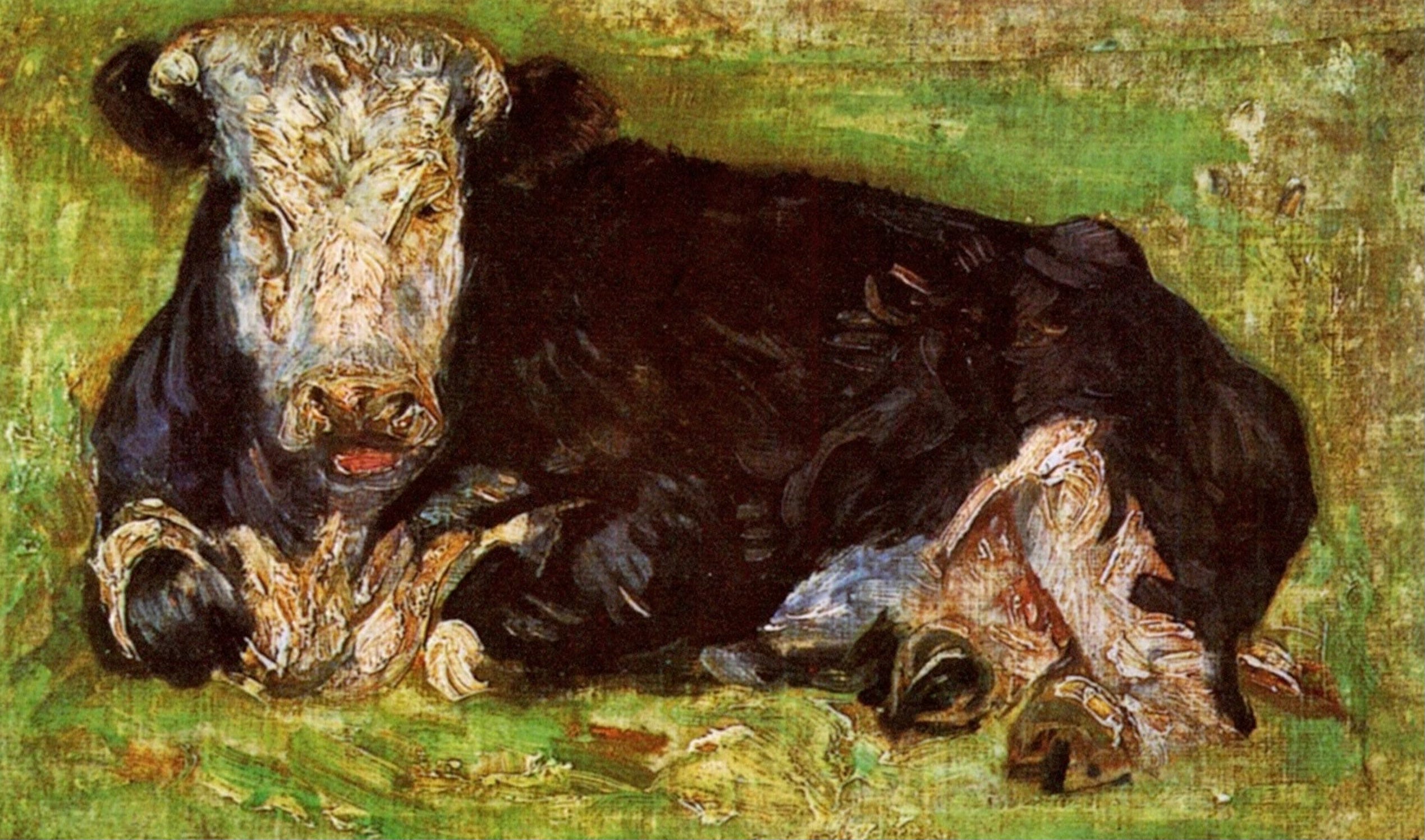
When invited to speak to student activists, I sometimes introduce them to my concept of a ‘vegan origin story’: the account of how one has come to embody the values that led them to the advocacy work that has become so defining of who they now are. Then I will ask (mostly at this point as a rhetorical question), “Could an appeal to such a story form part of a broader strategy of persuasion, that is, as an invitation to another to consider animals in a way that they hadn’t before?” I present them with an example drawn from my personal history, a story that I have often employed in my own work as an activist:
When I was young, maybe 10 or 11, I would take the bus to and from school. Sitting by the window, usually alone, I’d amuse myself by tracking the changes in the scenery. I lived in the suburbs of Miami, so mostly it was stuff like strip malls, gas stations, non-descript warehouses, canals, and phosphate mines. There was, however, one notable exception to this endless repetition of the same: a small fenced-off pasture with nothing on it but a large oak and a solitary cow. I often looked forward to seeing this cow. She seemed always to be standing at the edge, looking (a little like me) out at the world with uncomprehending curiosity as it circled round her at a frenetic pace. Was she happy? Why was she always alone? Would it always be this way for her? I remember asking these questions. Likely they were asked just as much of myself as of her. Our lives were lived in parallel. And sometimes even, as our bus drove past her, our eyes would momentarily meet.
But it wasn’t every Friday that I’d take the bus home from school; some days either my mom or my dad would come to pick me up instead. Those rare occasions were always marked by a short detour to a fast-food restaurant of my choosing. It was on one of these happy occasions that a question occurred to me which I had never before considered. Unwrapping the burger on my lap, I asked aloud to my mother, What is this burger made of? Cows, she said.
I felt shock, betrayal. Why had I been allowed to do this? Why had no one ever told me? I wrapped the burger back up again and I declared that I did not want to eat this cow, cows were not to be eaten. I do not remember exactly her response, but I think it consisted of what you’d expect: she pointed out that eating cows was in fact normal—everybody did it—but that my response was not. And so, reluctantly, I unwrapped the burger for a second time and began to eat it.
On the drive home, we happened to pass by the plot of land where the same cow lived, but I found now that I could not turn my head to look; I could not face her for fear of her looking back at me. I knew then that I had to decide: either to be ‘normal,’ which meant never again asking the question of who it is I am eating, never returning the gaze of the animals, abused and exploited, who are always there at the peripheries of our lives, becoming thereby complicit in their increasing invisibility, or I could refuse to eat them, whatever the social cost, and thereby continue to live just as I was: I was a curious and impressionable child attuned to such things as the strange beauty of a cow in a field in the suburbs of Miami, yet to know the shame, remorse that for so many others accompany a meeting of the eyes, instead having known only wonder.
“How do you think I chose?” I will ask my interlocutor. When they answer correctly, I smile and say, “Yes, I have not eaten animals ever since. The person that I was I still am.”
After having shared this story with the student activists, I ask them to put themselves in the shoes of a person who eats meat but who hasn’t yet given the matter much thought. How would they imagine such a person to react to my story?
“Well, it is a little sappy,” someone might say.
“Yeah, but at the same time he does make himself vulnerable,” another chimes in. “I can’t imagine someone going on the defensive after hearing a story like that. Which is good, because it is true that non-vegans usually go on the defensive when it comes to the topic of eating meat; sometimes before you even get around to making an argument.”
“And that vulnerability might also be good if it gets the other person to respond in a similar manner.”
“And what might that look like,” I ask, “to respond in a similar manner?”
“I guess, ideally, they would search inside of themselves for some experience that is in harmony with yours.”
I allow discussion over the merits of this approach to persuasion to continue until it seems like they have a good sense of the various components that make for a compelling origin story. Then, I have them break out into groups of two or three and task each of them with coming up with one for themselves in collaboration with their partner (the best stories after all are forged in conversation). After a few minutes, I ask if anyone is struggling to think of something. Inevitably, a few will raise their hands, and to them I propose an entirely different assignment. “Can you come up with an argument designed to convince someone of the wrongness of eating meat? And unlike an origin story, I want you to try to make this argument as impersonal as you can. This should be an argument that everyone, no matter who they are or what they happen to care about, ought to accept.”
When it comes time for us reconvene and to share the stories and arguments that have been workshopped, a pattern seems to me to emerge. On the one hand, the stories are touching, mysterious; we find ourselves wanting to know more, understand why; we are reminded of similar happenings in our own lives, feel compelled to share in turn; conversation then leads to distilling the deeper meanings and implications of these stories—theirs and ours. When a precious thing is given, I tell them, the instinctual response is to give something in return.
The arguments, on the other hand, inevitably strike us as cold and perhaps even arrogant by comparison. The speaker seems to be setting themselves up as an authority over the other, wanting to coerce them into a conclusion that was settled in advance, according to some calculus in which the other had no say. Perhaps the pattern is this, I propose to them, to share is to invite another to look along with you, calling on their sympathetic imagination, whereas to argue is to issue a command, which is likely to be resisted because nobody likes to be told what to do.